CHICAGO PERSONAL TRAINING
Wellness By Design

Home |Personal Training | Fitness and Health Guide | Newsletter|Contact Us |Index |Events Calendar NEW!Email Health and Fitness Reminders   NEW!How long do you have to workout to burn that food?

                    Welcome to Chicago Personal Training LLC
You can find answers to all your health and fitness questions here with our articles and training
information; and of course the BEST personal training in the Chicagoland area and suburbs.
Training available at your home, office and/or Core Fitness Chicago training studio in Chicago.

Click here to fill out a personal training questionnaire


Personal Training
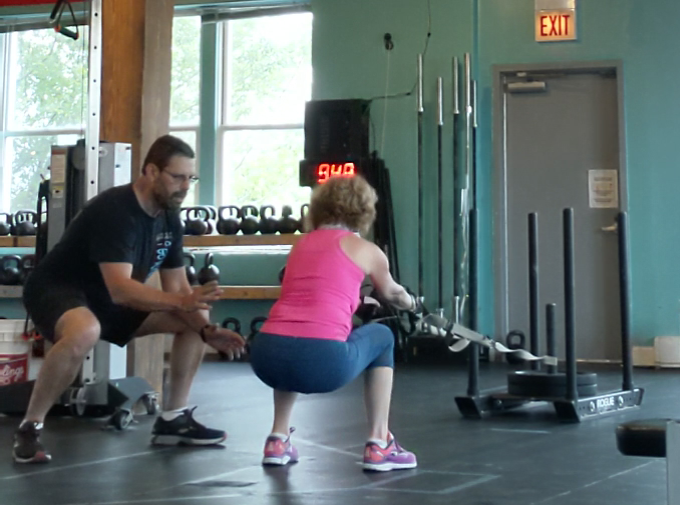
Chicago Personal Training is owned and operated by Barry Broutman. Dedicated to helping people achieve their goals. 

Whether you want to lose weight, 
build muscle, reshape your body
or improve your overall health we
can help. Private appointment times are scheduled at your convenience and at a location most accessible to you; at home, the gym, or the office.
[read more]


MAXIMIZING YOUR WORKOUTS
HOW HARD ARE YOU WORKING


There are many reasons why we workout; Improved health, a better body, sports enhancement, the list goes on and on.

How much time do you spend exercising? Most people will spend between one and two hours exercising, three to four times a week. However, you should ask yourself "How hard am I working"? That statement in mind, there is a basic truth about the human body you should remember. “The fitter you are the harder you have to work”.
Lets look at this statement a little closer.

THE FITTER YOU ARE THE HARDER YOU HAVE TO WORK is the reward for all your hard work. It means that you have accomplished something. For instance, if your past aerobic workouts had you walking
2 miles in 30 minutes and you progressed that to a 2 mile run in 20 minutes you would of noticed many changes during that progression of time and speed. You would have found what was hard is now easy, your legs don't have the same soreness that they may of once had, breathing is now easier. You have become fitter! However, over time your body does not see that 2 mile run as  a challenge anymore. So in essence that original improvement in your body now gives you maintenance. Not to say that it is wrong, but let me encourage you to work a little harder, run a little faster or stretch a little longer, because if you liked the improvements that you’ve made so far, think of all the good things to come.

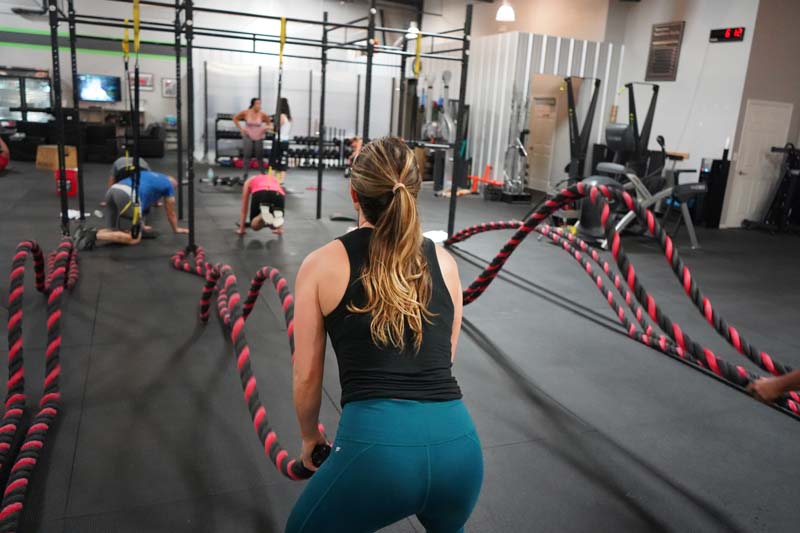
The same principal applies to your anaerobic exercises. When was the last time you added a few pounds to your arm curls or to your leg pressing exercises? In order to improve your body you must overload it. Women do not have to be afraid of “bulking up”, you don’t have the testosterone to do that. The only group I would caution about overloading would be anyone with high blood pressure, heart disease, or if you are pregnant. Take a few minutes and review your exercise routine. Ask yourself if you can add a few more minutes to your cardio routine or add some resistance to it. When your lifting weights ask yourself if you can do a couple more repetitions with good form instead of putting down the weights after you reached a specific number.

Remember, setting goals is easy, achieving goals is where the reward is!

LOSING WEIGHT


Losing or maintaining your weight is directly affected by how many calories you intake per day. The single most effective way of producing a positive outcome is keeping a food diary.

There are many ways to keep a food diary, and recording what you ate may not be the only thing you want to track. The most important thing to remember
is to keep track of any aspect of eating that is giving you trouble. This could be the times of day you ate, how you feel before or after you eat, where you eat or how much you ate.

Here are some ideas that you can try:
Write down only the foods your over ate

Track all the foods you avoided
(Then you can add up all the pounds 
you saved yourself)

Write down the foods you are about to eat BEFORE you eat. You may find
that this very helpful.

Remember
If you have time to eat it; 
you have time to write it down!


Knowing The Basics
Physical fitness is most easily understood by examining its components, or "parts." 
There is widespread agreement that these six components are basic.

Cardiorespiratory Endurance - the ability to deliver oxygen and nutrients to tissues, and to remove wastes, over sustained periods of time. Long runs and swims are among the methods employed in measuring this component.

Muscular Strength - the ability of a muscle to exert force for a brief period of time. Upper-body strength, for example, can be measured by various weight-lifting exercises.

Muscular Endurance - the ability of a muscle, or a group of muscles, to sustain repeated contractions or to continue applying force against a fixed object. Pushups are often used to test endurance of arm and shoulder muscles.

Flexibility - the ability to move joints and use muscles through their full range of motion. The sit-and-reach test is a good measure of flexibility of the lower back and backs of the upper legs.

Body Composition - is often considered a component of fitness. It refers to the makeup of the body in terms of lean mass (muscle, bone, vital tissue and organs) and fat mass. An optimal ratio of fat to lean mass is an indication of fitness, and the right types of exercise will help you decrease body fat and increase or maintain muscle mass.

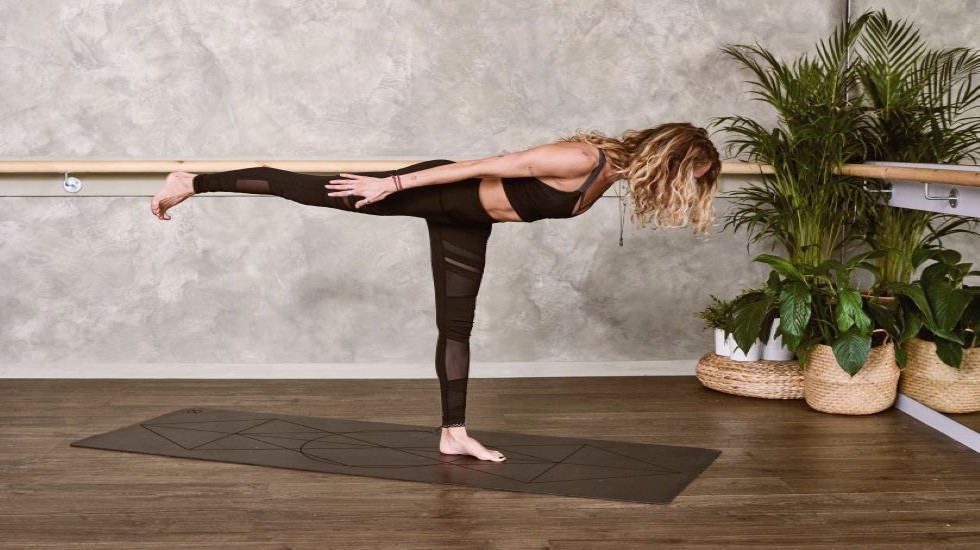
Balance - often overlooked as an important part of one's fitness level.  As one gets older there is a appreciation for more control over one's body.  Having good balance also minimize injuries due to falling. Hips and quad muscles (front of the leg) as well as strong ankles are vital to reducing chances of injuries due to a fall. 


TIP OF THE DAY


Susan G. Komen
2007 Aspen/Snowmass RIDE
for the Cure

To see pictures of my
100 mile Aspen ride

 Click This Link


Site Map


NEW!
Resource Page
Click here for helpful links to reliable information on food, fitness testing and wellness information


Click here to download FREE worksheets to help you reach your goals!

Helpful Links

MYTHS AND FACTS

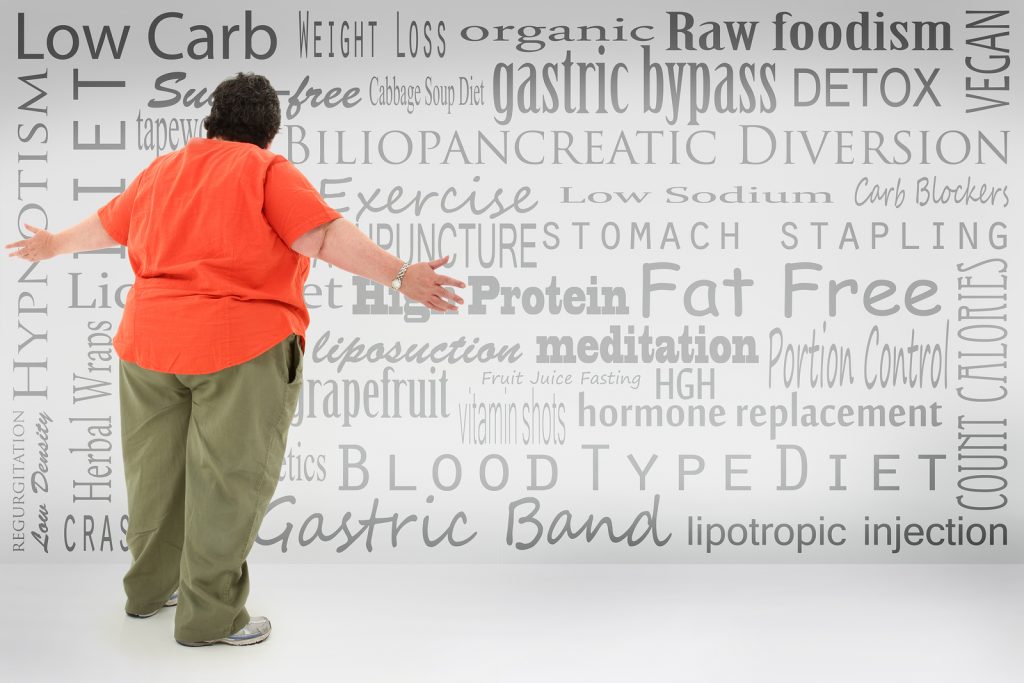
Every time you turn on the television or pick up a magazine you will find an advertisement for a miracle product that will help you lose weight or build muscle faster then you could ever dream possible...[ read more ]

MEASURING YOUR 
HEART RATE

Heart rate is widely accepted as a good method for measuring intensity during running, swimming, cycling and other aerobic activities. Exercise that doesn't raise your heart rate to a certain level and keep it there for 20 minutes won't contribute significantly to cardiovascular fitness....[ read more ]


CONTROLLING YOUR WEIGHT

The key to weight control is keeping energy intake (food) and energy output (physical activity) in balance. When you consume only as many calories as your body needs, your weight will usually remain constant. If you take in more calories than your body needs, you will put on excess fat. 
If you expend more energy than you take in you will burn excess fat....
[ read more ]


POSTURE
Good posture not only looks 
good, it feels good. [read more]

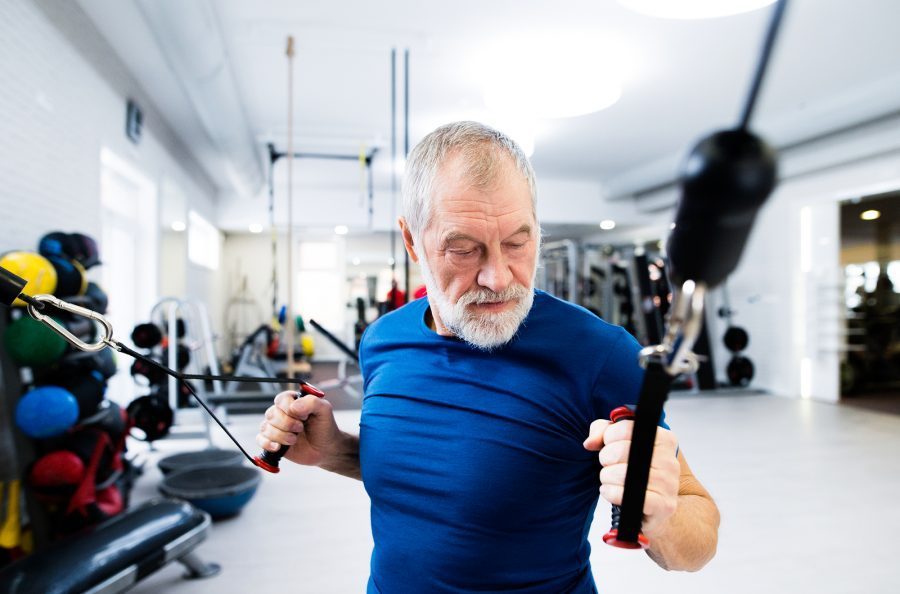
OLDER ADULT TRAINING
Quality of life is directly dependent on our fitness levels. Taking time to exercise will help you participate in the events that are important to you. 
[read more]

BALANCE
Balancing exercises can be incorporated into weight lifting routines as well as your aerobic activates.
[read more]

TRAVELING WITH
A BAD BACK

Spending hours in a airplane seat and then lugging your suitcase around with you can be very aggravating, especially to your back..... [ read more ]

Home | Personal Training | Fitness and Health Guide | Newsletter| Contact Us| Index | Links